 Texas Butterfly
Pipevine Swallowtail
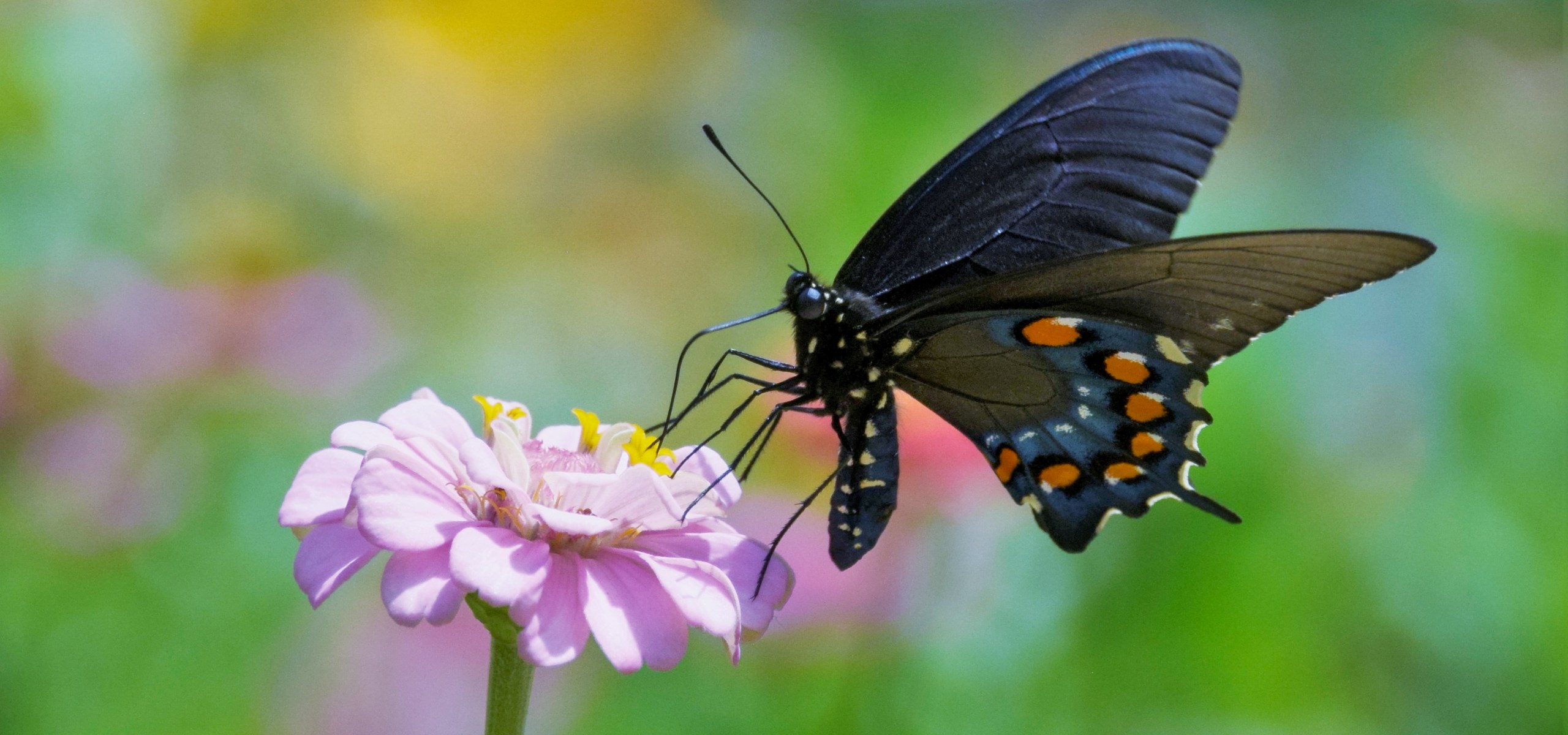
Pipevine Swallowtail
Battus philenor
The Pipevine Swallowtail is abundant throughout Texas. It frequents gardens and can be found in flower fields and groves of trees. Its caterpillars feed on pipevine, a noxious plant which makes the butterflies taste bad to predators.
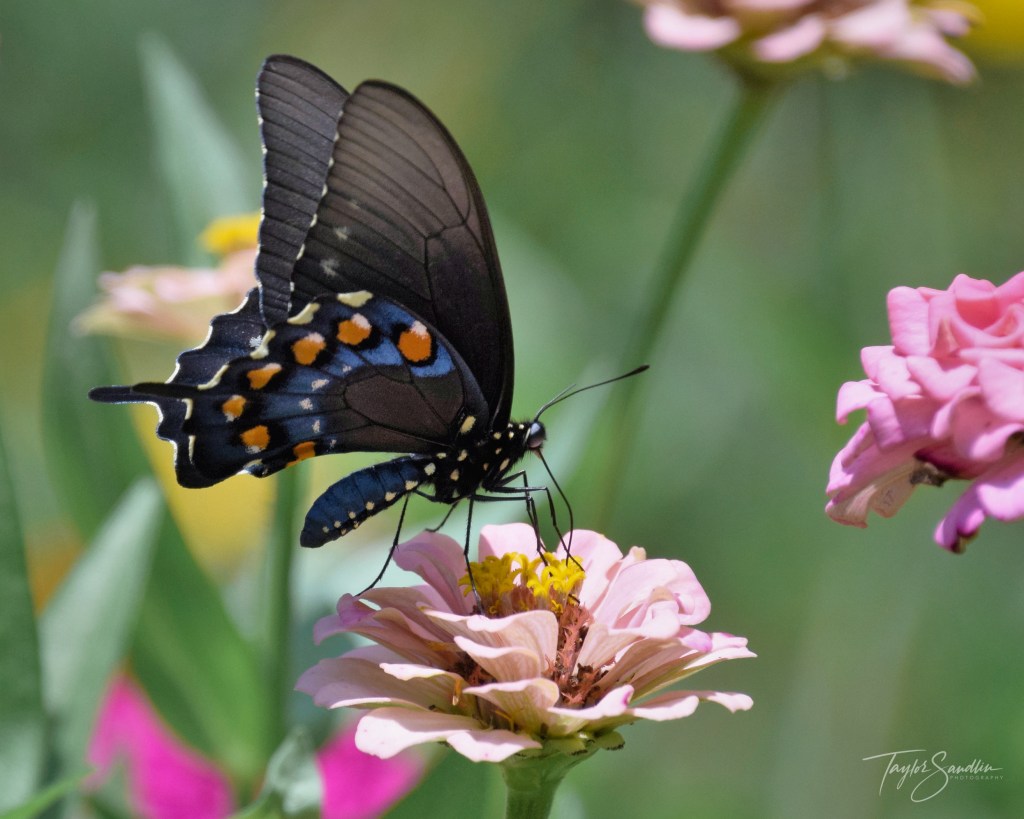
Several other species of swallowtail mimic the Pipevine including the Spicebush and Black Swallowtails. The Pipevine stands out from its imitators with a single row of orange circles on the underside and a single row of white spots on the upperside.
The males shine an iridescent blue on the lower upperside while the females are mostly black.
I have had success in attracting Pipevine Swallowtails to my own yard with plumbago, vinca, and zinnia.
Similar species: Black Swallowtail, Spicebush Swallowtail



 Texas Butterfly
This is all very impressive! The detail in the photos is stunning. Maybe even more importantly, just looking at them elicits feelings of peace and calm. Great timing for a beautiful new project.
LikeLiked by 1 person
Thanks for the kind words and for checking out the website! I need you to tip me off the Monarch migration this fall. I bet I could slip out west for a few days to get some shots and enjoy a visit with friends.
LikeLike
Pingback: Black Swallowtail | Texas Butterfly
I live in the DFW area and have grown pipevine for many years. I have always enjoyed seeing the pipevine swallowtails fluttering around the vine and the caterpillars emerging in mid-summer. However, last year I didn’t see any caterpillars until the fall and I haven’t seen any so far this summer. I’m worried that our extremely hot temperatures are impacting the butterflies’ lifecycle. What information can you share with me about the impact on this beloved butterfly?
LikeLike
Wendy, thanks for commenting. When I lived out in west Texas I had Pipevine Swallowtails in my yard almost daily, and I did see a number of them on a recent trip to Junction, TX. They were having a grand time on flowers blooming near the South Llano River.
I now live in Houston and rarely see them though they are found here. I’ve even grown pipevine for several years without attracting any. I’m not sure how increased temperatures impact their life cycle, but it is a question worth asking.
LikeLike
I live SE of San Antonio near Floresville – Throughout the late spring and summer I have numerous Pipevine Swallowtails enjoying nectar from my Passion Vine, Esperanza, and Pride of Barbados, but I have no pipevine and assume it must grow wild nearby? Would love to include some for them, what is the best source?
LikeLike
Rhonda, thanks for commenting! I am a very amateur gardener. I think almost any variety of pipevine can work with the one exception being Elegant Pipevine (Aristolochia elegans). It is toxic to the larvae. Texas Dutchman’s-pipe (Aristolochia reticulata) and Wooly Pipevine (Aristolochia tomentosa) are native to Texas. I have seen Virginia snakeroot (Aristolochia serpentaria) suggested on several gardening sites.
LikeLike
Pingback: Frostweed: A Late-Season Refuge for Pollinators – Tim Castelli