 Texas Butterfly
Monthly Archives: April 2020

The name says it all. This is a little yellow butterfly found across Texas. Two little black dots at the base of the hindwing will help you distinguish it from similar small, yellow butterflies.

You’ll find this small orange butterfly throughout Texas almost all year long. I see it more in the Houston area than I did in West Texas, but it was common there, as well. It usually flies low to the ground and feeds on a variety of flowers in both fields and gardens.

You can find this butterfly throughout most of the United States and all across Texas. I have seen it on any number of flowers included purple aster, blue greg’s mist, zinnias, and more.

Found primarily in East Texas, the Spicebush Swallowtail mimics the Pipevine Swallowtail. It differs from the Pipevine in two distinct ways. First, it has two rows of orange spots on the underside of its wings making it look more like the Black Swallowtail. Second, the white spots on the upperside cling close to the edge of the wings.

Primarily found in the tropics, there are a few metalmarks that call Texas home. One is the Fatal Metalmark. This tiny butterfly is a rusty brown on top with brighter orange underneath. Like other metal marks, it has a metalic band that runs around the fore and hindwings.

Last Saturday, my wife and I went on a drive to look at the bluebonnets near Brenham, Texas. We couldn’t stop and get out in some of the normal spots because of the quarantine requirements. Still, we managed to spend a few minutes walking around Old Baylor Park at Independence, Texas. We were probably about a week past prime wildflower season, but the butterflies didn’t seem to mind. We saw: Dainty Sulphurs,… Read More
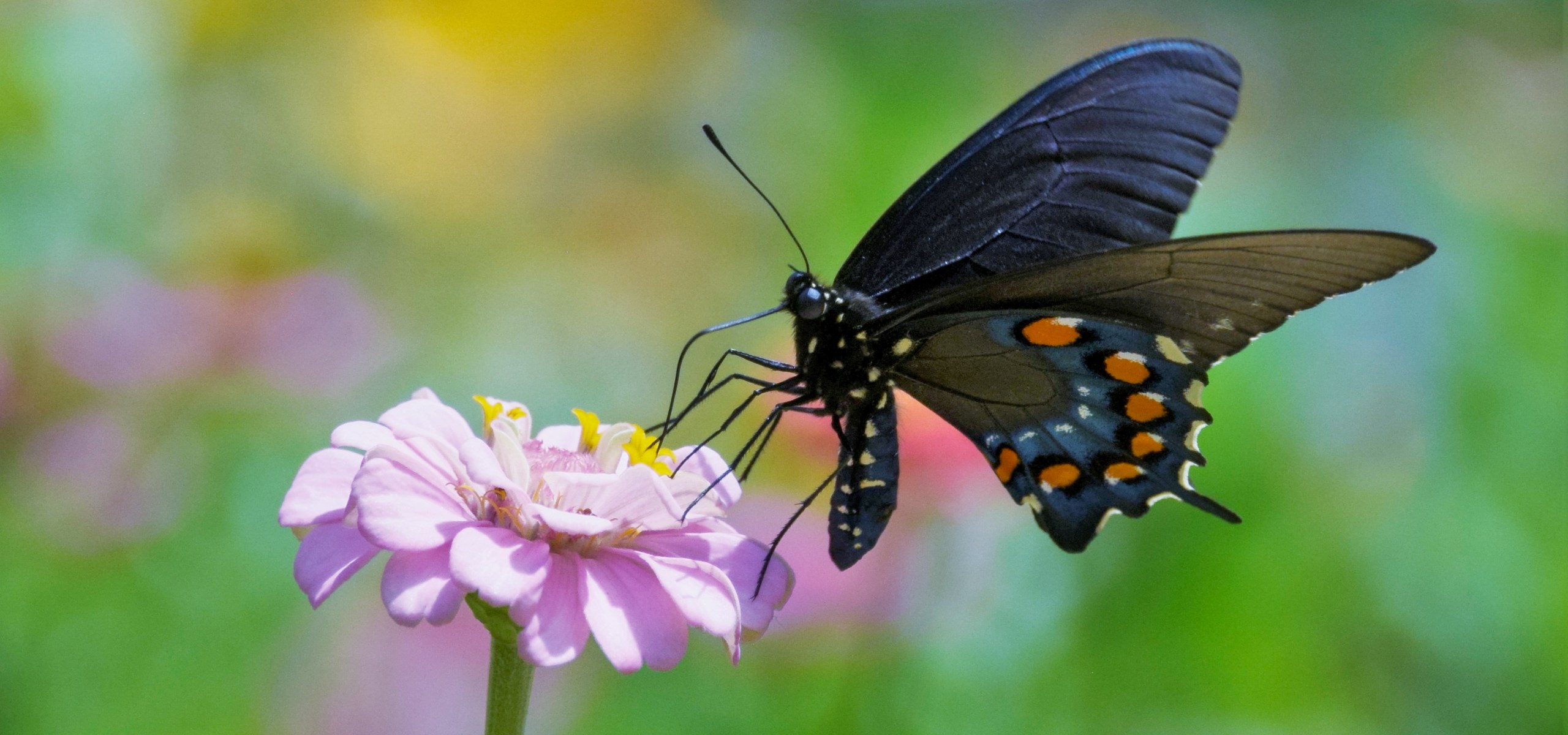
The Pipevine Swallowtail is abundant throughout Texas. It frequents gardens and can be found in flower fields and groves of trees. Its caterpillars feed on pipevine, a noxious plant which makes the butterflies taste bad to predators. Several other species mimic the Pipevine including the Spicebush and Black Swallowtails.
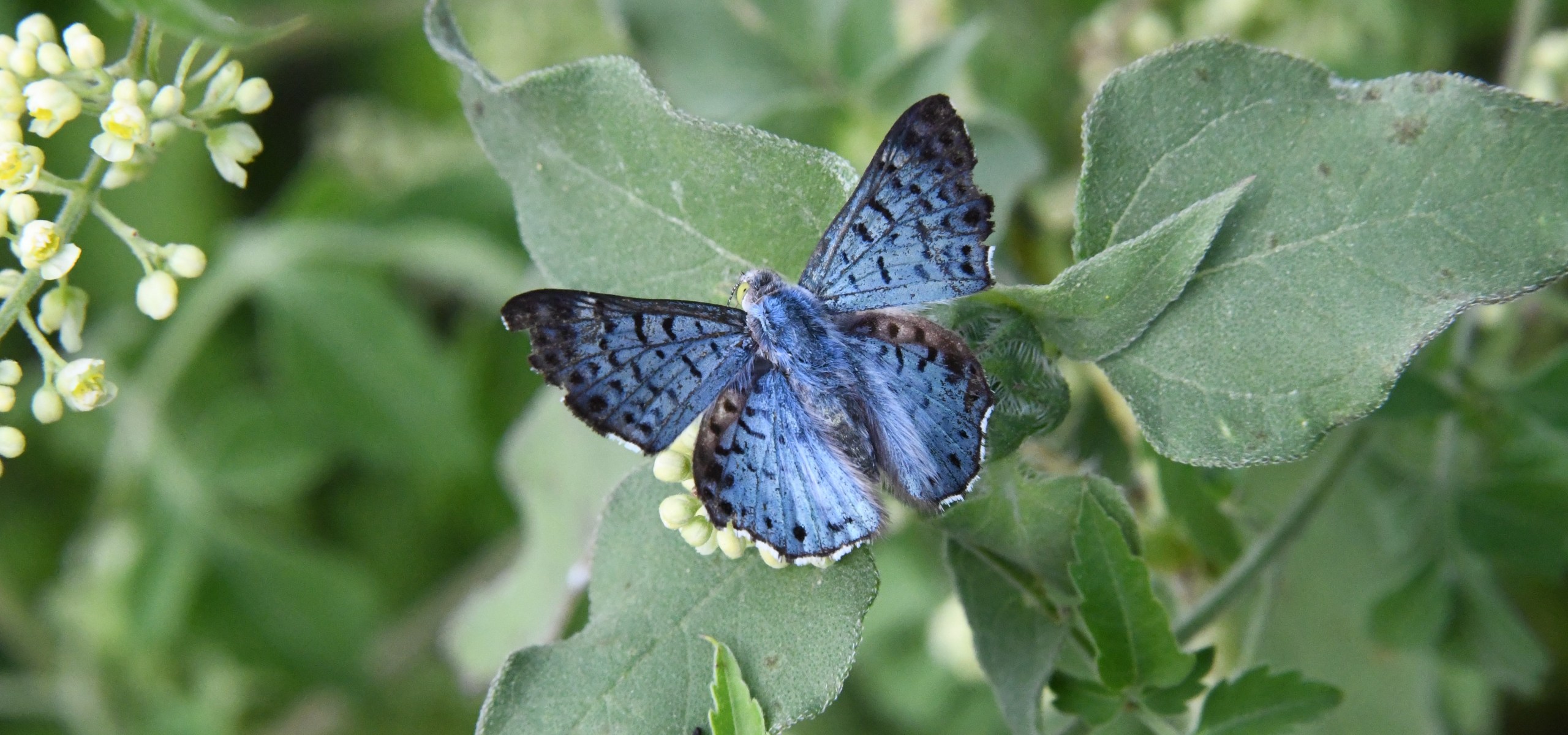
Found only in extreme southern Texas, the male of this species is an iridescent blue. It perches with its wings open making a shot of the underside difficult to get.

One of the largest butterflies in North America, the Giant Swallowtail lives throughout Texas. You will see this butterfly in both your garden and flitting along wooded paths.

The Gray Hairstreak is the most common hairstreak in Texas. You will see it everywhere: fields, flower gardens, in your backyard, and in the countryside. Still, it’s one of my favorites. At this point, it’s like an old friend.
 Texas Butterfly